
The first year sets the tone for every grooming session that follows.
A puppy that learns early that baths, brushing, nail trims and face cleaning are normal parts of life is far easier to care for at 12 months than one who only meets grooming when their coat is already matted, their nails are too long or they are frightened by the whole process. Good puppy grooming is not about making a young dog look perfect. It is about building routine, comfort and healthy coat habits from the start.
For most owners, that starts with a few practical questions. When should the first puppy bath happen? Which puppy shampoo is safest? How do you handle wriggly paws, a sensitive face and a coat that keeps changing as your puppy grows?
Plush Puppy Australia makes this easier because its products are designed around coat outcome and coat condition, rather than a one-size-fits-all approach. The brand notes in its Top Tips for New Puppy Care article that all Plush Puppy shampoos are suitable for puppies, with gentle naturally derived ingredients, and it specifically recommends Sensitive Skin Shampoo for puppies who are itchy or sensitive.
The first bath should be calm, short and simple
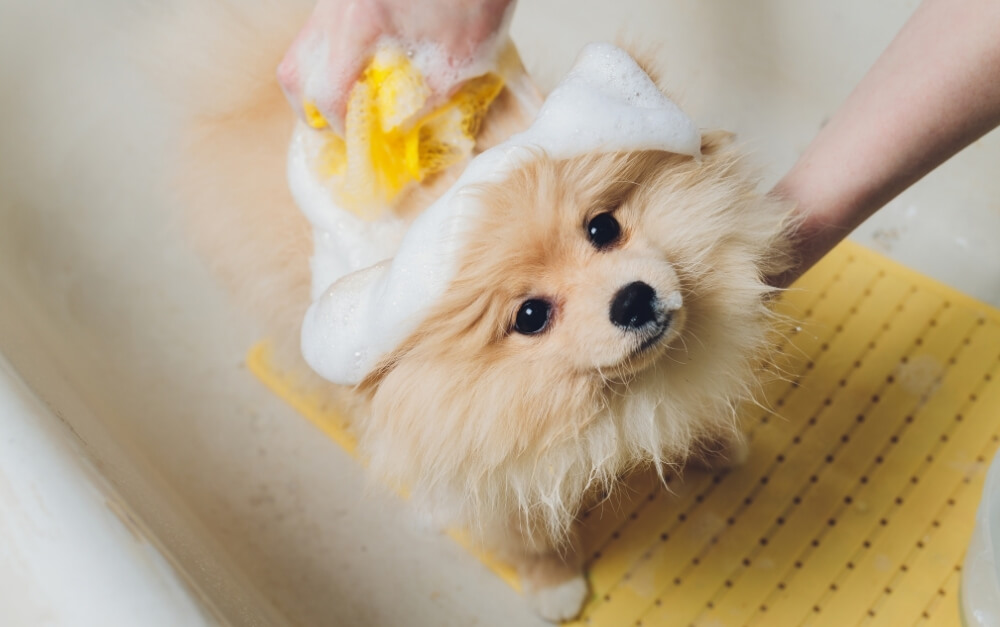
The goal of the first bath is confidence, not a deep spa treatment.
Use lukewarm water, keep the room warm, and have your towel ready before you start. Wet the coat gently, avoid rushing the face, and keep the session brief. Puppies do better when the experience feels predictable. Slippery surfaces, cold air and too much handling are often what make a first puppy bath stressful.
When choosing a puppy shampoo, mildness matters. Plush Puppy explains in its Which Shampoo Should I Use? guide that its shampoos are result-based, with different options for shine, hydration, texture and sensitivity. For a young dog with delicate skin, Sensitive Skin Shampoo is a sensible starting point because it is described by the brand as an extremely low-irritant formula that gently cleanses without adding further irritation.
If your puppy has a normal coat and no obvious skin sensitivity, a light wash with the right diluted shampoo is usually enough. You do not need to over-bathe. In the first year, grooming puppies well often means doing less, but doing it properly.
Face cleaning needs extra care
The face is where many puppies become wary.
Water near the eyes, damp ears and repeated wiping can make a pup fussy very quickly, so face cleaning should be handled differently from body washing. Plush Puppy’s Let’s Face It is made specifically for this job. The brand describes it as a hypoallergenic, sulphate-free, no-tear foaming face shampoo with Blue Cypress extracts and panthenol, designed to clean and soothe the face and eye area.
That kind of product matters because shampoo, for all ages from puppy to adult dogs should never be used directly around the eye area as it can cause damage to the eyes. If your puppy gets food around the muzzle, tear staining around the eyes, or general grime on the chin, cleaning that area with a face-specific formula is usually the safer option.
Keep your technique gentle. Support the chin, use a small amount of product, and rinse carefully. For many puppies, the face is best introduced separately from the full bath so it does not all feel like too much at once. Plush Puppy’s Let’s Face It is best used as first product on and the last product off, this helps protect your puppy’s eyes.
The first brush matters as much as the first wash
Brushing is where puppy grooming becomes a routine rather than an occasional job.
Plush Puppy’s puppy care advice says to start very young so your pup gets used to brushing, and notes that different coat types need different brushes from its brushware range. That is especially important in the first year because puppy coat care changes fast. A short-coated breed may only need light maintenance, while a long-coated or fluffy puppy may need very regular brushing to stop tangles turning into mats.
The first brush should be short, quiet and pleasant. A minute or two is enough. Brush when your puppy is already calm, such as after a nap or a walk, and reward often.
If the coat is knotty, brushing dry can be uncomfortable. Plush Puppy recommends OMG ready-to-use grooming spray to make brushing faster and more comfortable, while helping detangle and smooth the coat. For owners, that means less pulling. For puppies, it means less reason to fight the brush.
Nail trimming should start before nails become a problem
Long nails change the way a puppy stands and moves. They also make handling harder because by the time nails are obviously too long, your puppy may already be suspicious of having their feet touched.
The answer is early paw handling. Touch each foot often, press gently on the toes, and make that part of daily life before you ever bring out nail clippers or a grinder.
For the first few trims, do very little. One or two nails is enough if your puppy stays relaxed. The point is not finishing every paw in one go. The point is teaching your puppy that nail trimming is safe.
This early stage of grooming puppies is where owners often go wrong by trying to force a full result too soon. Slow progress is still progress. If your puppy learns to stand calmly while you handle the feet, future trims become much easier.
Coat development changes what your puppy needs
Puppy coat care is not static in the first year. Many breeds go through obvious coat change as they grow, and what worked at 12 weeks may not be enough at 8 or 10 months.
Soft puppy fluff can hide tangles close to the skin. Adolescent coat can become denser, harsher, curlier or more profuse depending on breed. That is one reason Plush Puppy positions its shampoo range around coat result. In its Which Shampoo Should I Use? article, the brand explains that no single shampoo can provide every benefit for every coat, and that owners should choose products based on the result they need.
For example, Natural Conditioning Shampoo is described as a hydrating, softening option for coats prone to tangling, while Natural All Purpose Shampoo with Henna is aimed at shine on normal to slightly dehydrated coats. If a puppy develops dry coat, light tangling or weather-related roughness, choosing a shampoo that matches the coat’s condition makes more sense than reaching for a generic wash.
Building confidence is the real grooming job
Healthy grooming habits are built in tiny moments.
Put your puppy on a non-slip surface. Touch the ears. Lift the lips. Look at the paws. Brush one section. Wipe the face. Reward. Stop before the puppy becomes overwhelmed. Done often enough, these moments build confidence better than occasional long grooming sessions.
This is also where setup helps. A stable surface can make a puppy feel more secure during handling, and products such as the Pro-Grooming Mat are designed to add comfort underfoot during grooming. Even at home, reducing slipping can make a nervous puppy far more willing to stand still.
Confidence also grows when the products feel good on the coat and skin. Plush Puppy says its shampoos are primarily naturally derived and suitable for puppies, which gives owners room to choose based on coat type without abandoning gentleness.
Choosing puppy-safe products comes down to purpose
The safest puppy shampoo is one that is mild, appropriate for the coat and used correctly.
That is why product choice should begin with your puppy’s actual needs. Sensitive skin needs a soothing formula. A grimy coat may need a stronger clean later on, but not as a default for a baby puppy. Tangles may call for more hydration or brushing support. The face needs its own product.
Plush Puppy’s range gives owners clear options without making puppy grooming overly complicated. A simple starter routine could include:
- a gentle wash product such as Sensitive Skin Shampoo
- a face-specific cleanser such as Let’s Face It
- a brushing aid such as OMG grooming spray
- a suitable brush for the puppy’s coat type
That is enough for most homes. You do not need a full salon setup to do a good job in the first year. You need consistency, gentle handling and products chosen for the right reason.
Good first-year grooming pays off later
By the end of the first year, your puppy should be more comfortable with brushing, bathing, face cleaning and nail handling than they were at the start. That is the win.
A well-groomed puppy is not simply cleaner. They are easier to check for skin issues, easier to keep mat-free, and easier to take to a professional groomer if needed. More importantly, they are less likely to see grooming as a battle.
Puppy grooming works best when it becomes ordinary. Short sessions. Calm handling. The right puppy shampoo. A routine that grows with the coat.
That is what turns first-year grooming into a long-term habit.
FAQs
When can I bathe my puppy?
You can bathe your puppy at any age, and weekly baths are fine when you use a high quality product suitable for puppies. Many dogs live indoors and even sleep on our beds, so you don’t have to wait until your puppy is visibly dirty. The first puppy bath should focus on comfort and calm handling so your puppy builds confidence from the beginning.
The safest puppy shampoo is one made with gentle ingredients and chosen for your puppy’s skin and coat needs. Plush Puppy states that its shampoos are suitable for puppies, and Sensitive Skin Shampoo is a strong option for delicate or itchy skin because it is designed to cleanse without adding irritation.
How often should puppies be groomed?
Puppies benefit from gentle grooming several times a week, whether that’s a short brush, face wipe or paw handling session. They can also be bathed weekly at any age when you use a high quality product suitable for puppies and keep the experience warm and gentle.
The right frequency depends on breed, coat type and lifestyle, but regular low-stress grooming in the first year helps prevent mats, overgrown nails and fear of being handled.
Can puppies use adult shampoo?
Avoid shampoos that aren’t designed for dogs. All Plush Puppy shampoos are suitable for dogs of any age, so you don’t need a separate puppy shampoo. Choose a shampoo based on your puppy’s coat and skin needs; the Sensitive Skin formula is intended for puppies with skin issues, rather than as a precaution. Take extra care around the face, where a product such as Plush Puppy’s Let’s Face It can be useful.
How do I introduce grooming?
Introduce grooming in very short sessions and stop before your puppy gets upset. Start with touching paws, ears and face, then add brushing, gentle wiping and brief bathing as your puppy becomes more comfortable. Reward often and keep the setup secure. In early grooming puppies learn from repetition, so calm daily practice usually works better than occasional long sessions.